研究方向
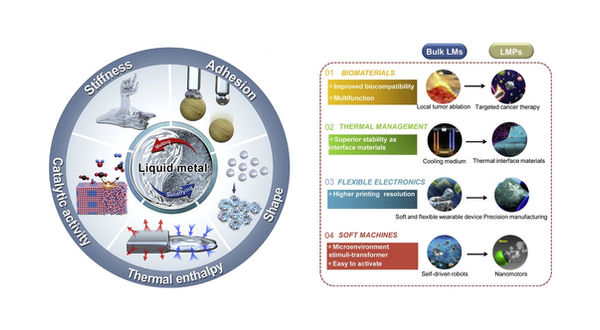
Liquid Metal
Gallium-based liquid metals as a room-temperature platform for materials synthesis. We print atomically thin oxide semiconductors (Ga₂O₃, Cr₂O₃, CrN, TeO₂) from the liquid surface, and drive EGaIn composites electrochemically for soft robotics.
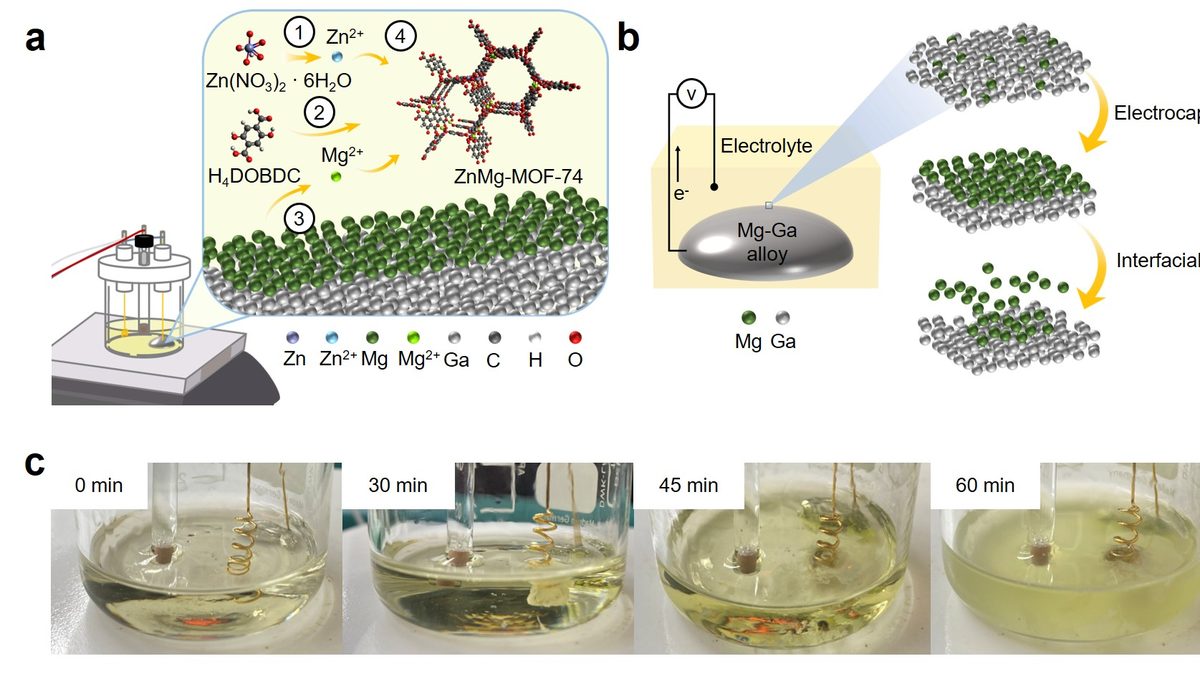
Liquid Metal Applications — Interface Control
Electrochemical synthesis at the liquid metal interface. Using a Mg–Ga alloy as the anode, electrocapillary and interfacial flow continuously refresh the surface, overcoming the passivation that limits solid anodes and enabling bimetallic MOFs such as ZnMg-MOF-74 at room temperature.
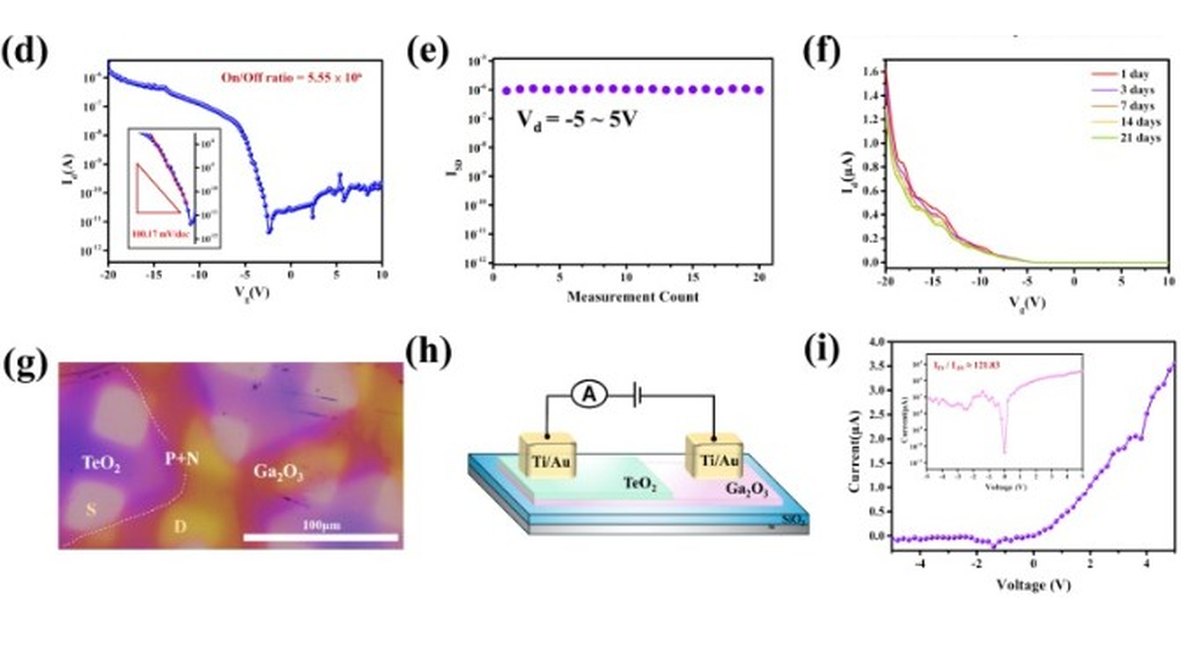
Liquid Metal Applications — Advanced 2D Electronic Devices
Electronic devices built from liquid-metal-printed 2D semiconductors. We fabricate p–n heterojunctions such as TeO₂/Ga₂O₃ and field-effect transistors, then verify them electrically — on/off ratio, rectification, and retention over weeks.
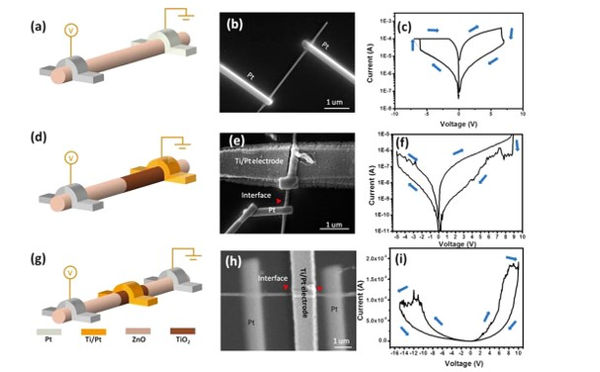
Resistive Random-Access Memory
Investigation of resistive switching mechanisms in oxide-based memristive devices, including nanofilament dynamics, multi-level resistance characteristics, and novel device architectures using Kirkendall effect nanotubes.
How do nanomaterials form?
We use in-situ TEM to directly observe atomic-scale growth, diffusion, and phase transformation in real time — revealing mechanisms invisible to conventional characterization.
Can room-temperature synthesis replace high-T processes?
Through liquid metal printing, we synthesize atomically thin oxide semiconductors at ambient conditions — enabling flexible, large-area electronics without energy-intensive fabrication.
What controls resistive switching?
By observing nanofilament evolution in situ, we uncover the fundamental mechanisms governing memory switching — from single-filament to dual-filament behaviors in oxide devices.
Can liquid metals become functional machines?
We explore electrochemically driven liquid metal locomotion for soft robotics, demonstrating remote-controlled movement of EGaIn@Fe composites.